


March is Colorectal Cancer Awareness Month
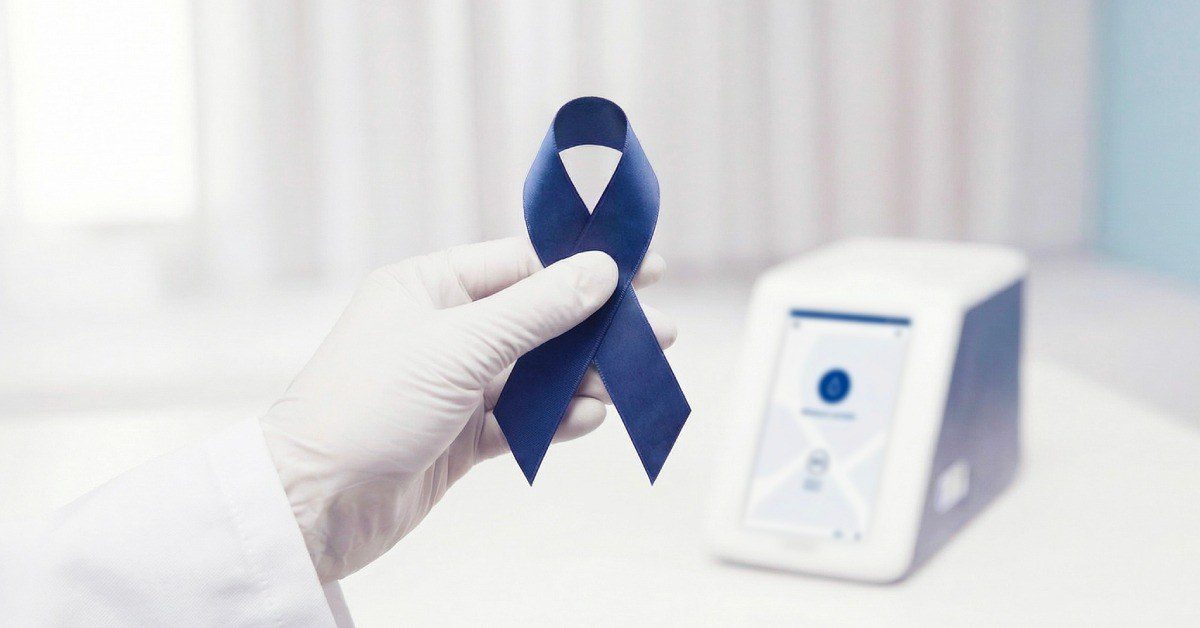
March marks the global Colorectal Cancer Awareness Month, dedicated to increasing awareness of colorectal cancer. Join us in raising awareness and highlighting the importance of early detection in achieving better outcomes.
Colorectal cancer is the third most common cancer worldwide
Colorectal cancer is a cancer of the colon (large intestine) or rectum1. It is the third most common cancer and the second most common cancer-related cause of death worldwide. Around 1.9 million colorectal cancer cases are diagnosed annually.2
The risk of colorectal cancer increases with age and incidence is highest among people over 50. However, incidence has also been rising among younger adults in several countries.2,3
The importance of early detection and screening
Early detection of colorectal cancer significantly improves the chance of survival. Early detection reduces delays in receiving care, and treatment is more likely to be effective when the disease is found at an early stage.1
Regular screenings are an effective way to detect colorectal cancer early – screening has been shown to reduce both incidence and mortality1. Screening using feacal immunochemical tests (FIT) is recommended by the Council of Europe and by the American College of Physicians for individuals between 50-74 years old.4,5
Faecal immunochemical tests (FIT)
In its early stages, colorectal cancer often has no symptoms1. However, the blood vessels of colorectal polyps or cancers are often fragile and easily bleed into the colon or rectum. Small quantities of lower gastrointestinal bleeding can occur in healthy individuals, but it may also indicate an underlying gastrointestinal disorder. This bleeding is rarely visible in the stool, but haemoglobin from faecal occult blood can be detected with a faecal immunochemical test (FIT), such as QuikRead go iFOBT.
Point-of-care FIT testing with QuikRead go iFOBT
QuikRead go iFOBT is a point-of-care FIT test for the detection and quantitation of faecal haemoglobin (f-Hb) in stool samples. The test can be used in routine physical examinations and in screening programmes for colorectal cancer.

The test provides quantitative information on excessive bleeding from the lower gastrointestinal tract and helps identify patients who should be referred for further gastrointestinal tract investigations, such as colonoscopy. The test is non-invasive and can be performed at any time – no dietary restrictions are required.
Quantitative results allow alignment with national screening programme recommendations in different countries, and results can be weighed against each patient’s age, gender and possible risk factors.
The QuikRead go iFOBT test, used together with the QuikRead go or QuikRead go Plus instrument, requires only a few manual steps and minimal hands-on time. An objective, instrument-read result is available within 2 minutes.
Benefits of QuikRead go iFOBT:
- High-quality test with minimal hands-on time
- Instrument-read quantitative result available in 2 minutes > allows local cut-off adjustment
- Handy and hygienic sampling vial > sample storage possible for up to 5 days in the sampling tube, allowing sampling at home
Contact us for more details
At Aidian, we are committed to supporting healthcare professionals with reliable, high-quality diagnostic tools that help improve patient outcomes. If you would like to learn more about QuikRead go iFOBT or discuss how we can support your clinic’s needs, please contact us for more information.
References:
- World Health Organization. Colorectal cancer. https://www.who.int/news-room/fact-sheets/detail/colorectal-cancer Accessed 3.3.2026.
- World Health Organization. Global Cancer Observatory database. https://gco.iarc.fr/ Accessed 3.2.2026.
- United European Gastroenterology. Burden, economic impact and research gaps: Key findings from the Pan-European study on digestive diseases and cancers. https://www.nxtbook.com/ueg/UEG/burden-economic-impact-and-research-gaps/index.php#/p/16 Accessed 3.3.2026.
- European commission. European guidelines for quality assurance in colorectal cancer screening and diagnosis – First Edition. Segnan N, Patrick J, von Karsa L (eds.), 2010, Luxembourg.
- Rex D et al. Colorectal Cancer Screening: Recommendations for Physicians and Patients from the U.S. Multi-Society Task Force on Colorectal Cancer.Am J Gastroenterol 2017; 112:1016-1030.